
Understanding the Paver Installation Process in Alabama, AL & Surrounding Areas
Paver installation is an essential part of enhancing outdoor spaces for residential and commercial properties in Alabama, AL, and throughout surrounding areas such as Gulf Shores, Foley, Perdido Key, Elberta, Josephine, Bon Secour, Magnolia Springs, and Fairhope. Whether the project involves a new patio, driveway, walkway, or pool deck, understanding the full installation process ensures lasting beauty, durability, and value.
What is the first step in preparing for paver installation?
The process begins with a detailed site evaluation where professionals examine the soil type, slope, drainage patterns, and intended use. This inspection helps determine how the site should be prepared so the final surface stays stable and functional over time.
Why is excavation a necessary part of paver installation?
Excavation removes old materials and ensures the proper depth for the new base. Contractors in Gulf Shores, Foley, and Perdido Key adjust the depth depending on the type of project, allowing for adequate support and preventing future sinking or movement.
What materials create a strong base for the pavers?
A compacted layer of crushed stone or gravel is used to form the foundation. This base is compacted several times to remove air pockets and ensure reliable load-bearing strength, which is vital for long-term durability.
How is the sand layer installed?
A smooth, evenly spread layer of bedding sand is placed over the compacted base. This sand helps position the pavers correctly, allowing them to interlock securely while also distributing weight evenly across the surface.
How are the pavers arranged during installation?
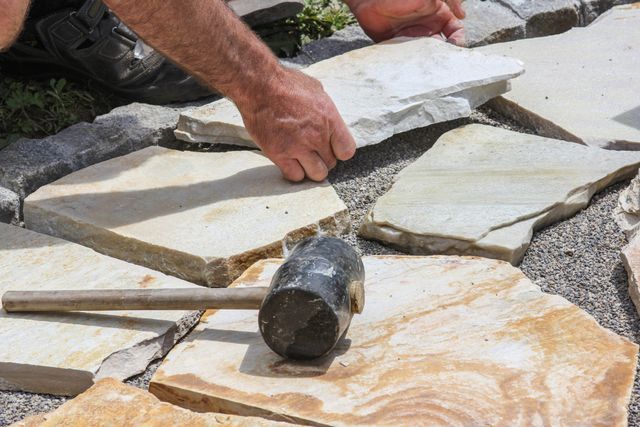
Pavers are laid one by one according to the selected design pattern, such as herringbone, running bond, basket weave, or a custom layout. Installers in Elberta, Bon Secour, and Magnolia Springs carefully align each stone to maintain straight joints and ensure a clean, attractive finish.
Why are edge restraints important in the installation process?
Edge restraints help prevent the pavers from shifting outward over time due to foot traffic, vehicles, and natural ground movement. Without proper edging, the entire installation may become uneven or unstable.
How are the joints between pavers filled and secured?
Once the pavers are in place, fine sand or polymeric sand is swept into the joints. A light mist of water is then applied to activate the polymeric sand, which hardens and locks the pavers together for added strength and stability.
What role does surface compaction play in the final stages of installation?
The entire surface is compacted using a plate compactor to ensure the pavers settle evenly into the bedding sand. This step minimizes movement, tightens the joints, and helps create a smooth and stable surface.
Is sealing recommended after installing pavers?
Many homeowners choose to apply a sealant to protect the pavers from stains, moisture, fading, and coastal salt exposure. This is especially beneficial in areas like Fairhope and Alabama where weather conditions can be demanding.
How long does a typical paver installation take from start to finish?
Most residential paver installations can be completed within two to five days, depending on the size of the project, the condition of the site, and local climate factors that may affect scheduling.
Final Thought
Understanding each step of the paver installation process helps homeowners and business owners in Alabama, AL, and nearby communities feel confident in their investment. When done correctly, pavers offer long-lasting beauty, strength, and value, creating outdoor spaces that enhance everyday living and stand strong for years to come.
How long do pavers typically last once installed?
High-quality pavers can last 25–50 years when installed on a strong base and maintained properly.
Are pavers better than concrete for coastal areas like Alabama?
Yes. Pavers perform better in coastal climates because they resist cracking, shifting, and salt exposure more effectively than poured concrete..
How often should I reseal my pavers?
Most pavers should be sealed every 2–3 years to maintain color, prevent staining, and protect against moisture.
Can pavers handle heavy vehicles for driveway use?
Absolutely. When installed with a properly compacted base, pavers can support heavy cars, trucks, and regular vehicle traffic.
What is the best time of year to install pavers in Alabama?
Spring and fall are ideal, but professionals in Alabama, Gulf Shores, and Foley install pavers year-round due to mild climate conditions.